Compressed air applications in concrete and structural work
From laying foundations and slabs for buildings, to constructing bridges and supporting structures, concrete is used extensively in the construction sector for structural work.
Compressed air can be required in the placing as well as finishing stages of laying concrete, playing a key role in achieving good compaction.
For optimum results, the compressed air supply must reliably meet the pressure and airflow required of the equipment, and deliver cool and condensate-free compressed air. Depending on the application, it may also need to deliver technically oil-free air.
Two of the most common concrete and structural work applications that require compressed air are described below.
Shotcreting
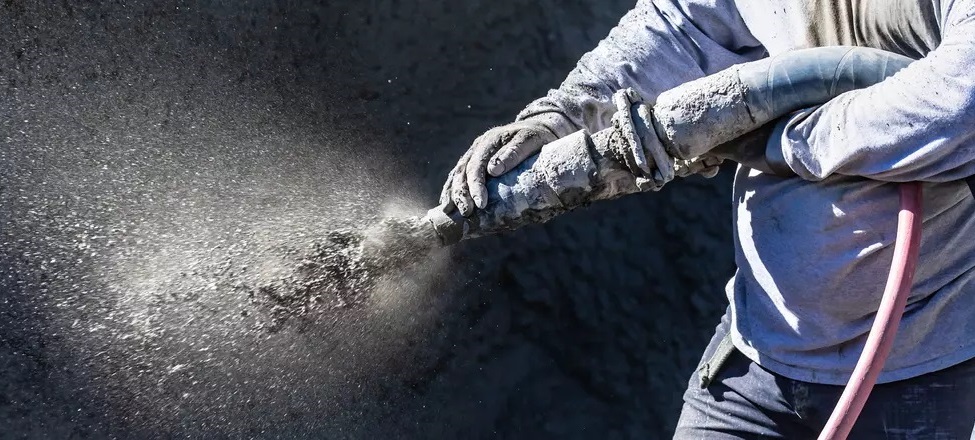
 Shotcreting, also known as concrete spraying, is a popular method of laying dry-mix or wet-mix concrete either horizontally, vertically or overhead.
Compressed air is an integral part of the shotcreting process. Once the concrete mix is pumped through a hose, compressed air is used to pneumatically spray it onto the desired surface. The compressed air supply is responsible for the velocity at which the concrete leaves the nozzle. Achieving the correct pressure and airflow is therefore critical in realising a high shotcrete velocity required for good compaction, which ensures denser concrete that will have a good compressive strength and be less permeable.
In order to maintain the reliability of shotcreting equipment, and to achieve high-quality concrete results, a dependable supply of technically oil-free, condensate-free and cool compressed air is critical. Moisture in the compressed air can for example, lead to the hose clogging or blocking, which would impact the consistency of the spray as well as the lifespan of the equipment. And, allowing contaminated compressed air to mix with the concrete can impact the curing process and its final compressive strength.
Concrete vibration
 Vibrating wet concrete is an important finishing stage to placing concrete, carried out to remove air pockets and achieve correct compaction and optimal spread. Whether an internal or external pneumatic concrete vibrator is used, compressed air plays an essential role:
Internal vibrators are typically required for large-scale pours. They require compressed air to drive the vibrator mechanism back and forth at high speeds. These vibrations transfer into the vibration head which is inserted into the concrete.
External vibrators are often used for precast elements like slabs and beams, or for vibrating thin sections of concrete. Attached to the formwork or the outer surface of the concrete, they also use compressed air to drive the vibrator mechanism, which in this case is transmitted through the external surface of the concrete.
In order to maintain uniform vibrator performance, and to sustain continuous operation for the job at hand, the compressed air supply must maintain the pressure and airflow required by the concrete vibration equipment. To ensure consistent performance, and to protect associated equipment from damage caused by moisture in the compressed air supply, the compressor must deliver cool and condensate free compressed air.
HPC KAESER Solutions for Concrete and Structural Work in Construction
 MOBILAIR portable compressors easily meet the requirements of concrete spraying and vibration applications, impressing with their exceptional power, versatility and dependability. Thanks to a multitude of available equipment options, cool, condensate-free and technically oil-free compressed air requirements can be met.
Particularly important in environmentally sensitive zones, soil contamination can also be prevented when the MOBILAIR portable compressor features a compressed air aftercooler. After the compressed air cools down in the compressed air aftercooler, the condensate drains out and is then evaporated by the hot engine exhaust gases in MOBILAIR models with a combustion engine, and is collected in a built-in canister in models with an electric motor.
Depending on the MOBILAIR model, the required compressed air treatment can be specified and integrated into the unit, or supplied as a compact external treatment system.
Let our compressed air experts assist you in selecting the optimum portable compressor solution to dependably meet the compressed air requirements of your shotcreting or concrete vibration equipment. Contact us today!
FAQ
- Why is the compressor selection important for pneumatic concrete vibrators? A properly selected compressor ensures consistent airflow and pressure, which is crucial for efficient concrete vibration. An inadequate compressor may cause irregular vibrations, reducing concrete strength and quality.
- What type of compressor is best for pneumatic concrete vibrators? A rotary screw air compressor which offers a steady air supply is recommended. Diesel-powered compressors are ideal for job sites without electrical access, while electric compressors work well in controlled environments.
- What air pressure (bar / psi) is needed for a pneumatic concrete vibrator? Most pneumatic concrete vibrators require 6 - 7 bar gauge working pressure (87 - 100 psi). Always check the vibrator manufacturer’s specifications, as some high-performance models may need slightly more pressure.
- What airflow (m3/min / cfm) is required for a pneumatic concrete vibrator? The required airflow (in m3/min or cfm) depends on the vibrator’s size and number of units being used simultaneously. As a general guideline: Small vibrators (25 mm diameter): 0.4 m3/min / 15 cfm. Medium vibrators (50 mm diameter): 0.6 m3/min / 22 cfm. Large vibrators (100 mm diameter): 2 m3/min / 70 cfm. When using multiple vibrators, add up the total m3/min (cfm) demand and ensure the compressor exceeds this requirement. Always check the manufacturers data sheet for the exact air demand requirements before selecting the compressor.
- What compressor power option is best for concrete vibration? Diesel, or petrol powered compressors are best for remote job sites with no electricity. Electric compressors are quieter and suitable for indoor, or inner city areas where there are noise and emissions restrictions.
- Should I use air treatment with the compressor? We recommended using compressed air treatment when powering pneumatic tools. The HPC KAESER air treatment system comprises an after cooler and condensate separator to meet these requirements. This air treatment package cools the air and avoids moisture building up in the lines which helps prolong the lifetime of the pneumatic tool.
Find out more about HPC KAESER's MOBILAIR range here
If you have any questions or need advice on our range of portable compressors please call our product manager Gerry McGettigan on +44 (0) 7918 054 663 or Wyn Jones +44 (0) 7824 016 383
Choose HPC KAESER for your compressed air needs
HPC and its Authorised Distributors are experienced and qualified to design, install, and tailor the compressed air system to meet your individual requirements while maximising efficiency. Peace of mind is also provided that all work will be in accordance with HPC guidelines and current legislation.
HPC and its Authorised Distributors are also able to offer a variety of service plan options tailored to your needs. Get in touch to speak to an experienced and knowledgeable HPC KAESER trained engineer about your compressed air needs.
Limited Time Offer!
From 1st March 2026, go "All Yellow" and take advantage of the Limited Time Special Offers we have on 3-in-1 compressed air packages!

Get In Touch With HPC Today
Do you need help finding the right air compressor solution or compressed air system for your business?
OUR NETWORK
We support a network of distributor partners across the UK and ensure that professional, experienced customer support is available both nationally and locally.
KAESER Compressors
HPC has solely represented the comprehensive KAESER range of quality, energy efficient air compressors and compressed air equipment in the UK for over 40 years.