As part of a major modernisation of Germany's Hirblingen sewage treatment plant, six HPC KAESER rotary screw blowers were installed to take care of aeration of the activated sludge tanks. Energy consumption was significantly reduced as a result.
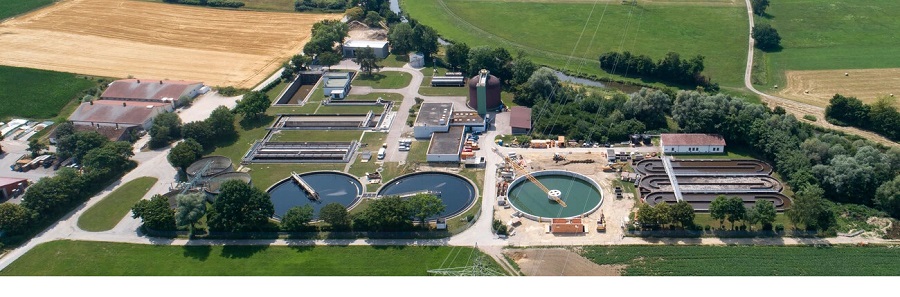
The most important employees at the mechanical-biological sewage treatment plant in Hirblingen are small. Even so small that they cannot be seen with the naked eye. We're talking about microorganisms. They work around the clock in the aeration tanks to clean the domestic and commercial wastewater generated in the association area.
But in order for this to succeed, compressed air in the form of fine bubbles is introduced into the mechanically pre-cleaned water in the aeration tank. The bacteria and microorganisms contained in activated sludge need oxygen in order to break down the organic pollutants in the wastewater. In addition, the microorganisms bind the fine contaminants into sludge flakes, which are separated in the subsequent clarification process.
Given the energy-intensive production of compressed air, the aeration tanks account for between 24 and 30% of the energy requirements of a sewage treatment plant. The energy efficiency of sewage treatment plants depends largely on the design of the aeration tanks and their aeration system. A fact that the Schmuttertal wastewater association did not ignore during the renovation in Hirblingen.