Typical compressed air applications in the water industry
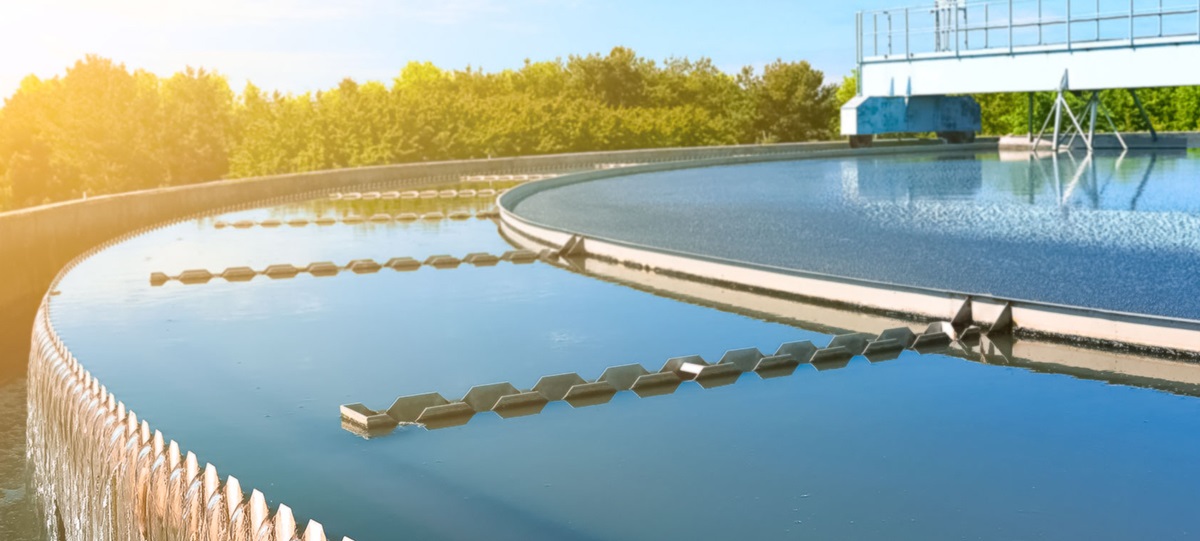
HPC KAESER enables energy-efficient coverage of the compressed air requirements of wastewater treatment plants.
Compressed air is essential for many processes in a wastewater treatment plant. However, it is also one of the largest energy consumers. As more and more operators strive to minimise their environmental footprint and reduce their operating costs, choosing energy-efficient compressed air systems has never been more important.
In this blog post, we take a look at the typical compressed air applications of a municipal wastewater treatment plant and discuss how HPC KAESER's innovative and intelligent compressed air solutions meet these requirements in an energy-efficient manner, optimising the associated energy consumption and CO₂ balance.
Typical compressed air applications in the water industry
Intelligent KAESER compressed air solutions in use at a municipal wastewater treatment plant
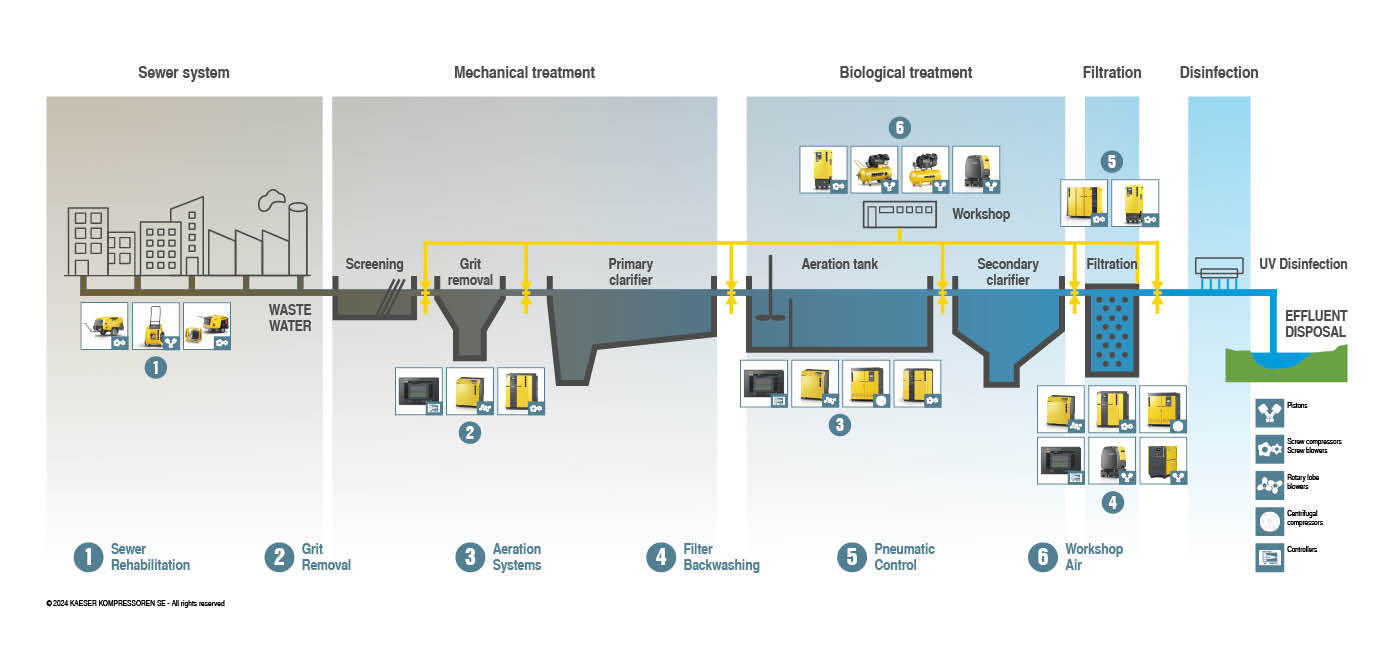
This diagram is available to download as a PDF, which you can access here.
Compressed air in the sewage treatment plant
Trenchless sewer rehabilitation

Compressed air is used extensively in trenchless sewer rehabilitation – from inflating sewer sealing cushions to driving compressed air milling machines for removing tree roots, to feeding and pressing liners into the pipes, and to cooling the UV lamps used to cure the lining material.
For such applications, a compact, lightweight, and portable compressor is needed that ensures a reliable, efficient, and high-quality compressed air supply. Depending on the location of the sewer rehabilitation work, the compressor must also be able to operate in strict emission and noise control zones.
HPC KAESER's extensive MOBILAIR range of mobile compressors and accessories is designed to deliver more compressed air with fewer emissions. It includes numerous options to reliably, efficiently, and effortlessly meet the stringent air quality requirements of sewer rehabilitation.
Grit chambers in sewage treatment plants

Reliable and efficient blowers are essential when using an aerated grit chamber system.
The inlet passes through the chamber at a reduced flow rate, allowing coarse debris such as sand and stones to separate through sedimentation.
Sedimentation is enhanced by using blowers to aerate the chamber, creating a spiral flow. The small air bubbles further promote the floating of separated fats and oils, which are then continuously removed mechanically.
Ineffective grit removal, caused by excessive or insufficient air volume, can lead to abrasion, contributing to system wear and tear and blockages further downstream. Ultimately, this can impair the effectiveness of subsequent treatment processes.
For optimal aerated grit removal, it is therefore crucial that the blower precisely maintains the required compressed air supply and pressure. HPC KAESER collaborates with its customers to understand the requirements of their specific operating conditions and ensure a reliable blower solution for optimal grit removal and cost-effective operation.
Aeration systems for biological wastewater treatment

Low-pressure air plays an important role in aeration systems for biological treatment, where blowers typically generate streams of fine air bubbles that are blown into the inlet to enrich the wastewater with oxygen, which the bacteria need to break down the organic matter present.
The optimal blower solution for a given ventilation system depends on a number of factors, such as the location and size of the plant, as well as the biological treatment method and technology used, such as activated sludge, MBR, MBBR, etc.
An efficient and reliable compressed air supply is not only crucial for the success of the biological process, but also impacts the overall energy consumption of the aeration blowers. KAESER works closely with its customers to deliver innovative, turnkey Water 4.0 blower stations that guarantee optimal results, maximum efficiency, and low energy consumption.
Filter backwashing

If the wastewater must meet certain quality standards or environmental regulations for reuse or discharge, the water is often filtered after the biological treatment is complete.
To maintain the functionality of the auxiliary equipment, filters and the filtration process, and to preserve the quality of the filtered water, continuous or semi-continuous filter backwashing is often used.
The water flow is changed to backwash the filters, and the accumulated waste and particles are blown from the filter outlet to the filter inlet using air, where they are released.
Depending on the filter backwashing technique, high or low air pressure is required . KAESER rotary lobe blowers are ideal for low-pressure filter backwashing. These blowers are designed for maximum efficiency, reliability, and durability with minimal maintenance, ensuring the lowest lifecycle costs.
For high-pressure filter backflushing, the oil-free HPC KAESER piston compressors of the i.Comp and AIRBOX series are the ideal solution, as they offer a wide range of options to meet the requirements of this application.
Pneumatic control

In some cases, the compressed air network is also used to supply air-driven pumps and for sludge drying.
HPC KAESER offers a comprehensive range of screw compressors and compressed air treatment components that meet a wide variety of requirements for the pneumatic control of a wastewater treatment plant.
The compact AIRCENTER systems are a good starting point – these complete systems integrate a highly efficient screw compressor with a refrigerated dryer and compressed air receiver. The refrigerated dryer, together with an optional microfilter, ensures clean, dry air for the reliable operation of pneumatic valves. For large wastewater treatment plants requiring their own compressed air station, HPC KAESER can offer a complete, future-proof compressed air station for optimal efficiency.
Workshop air

For workshops that don't constantly require large quantities of compressed air, HPC KAESER piston compressors are the ideal choice. They are available in both mobile (CLASSIC/PREMIUM series) and stationary (KCT/AIRBOX series) versions.
For larger workshops with a constant compressed air demand, a screw compressor can be the optimal solution. The compact HPC KAESER AIRCENTER series offers a complete compressed air system that integrates a highly efficient screw compressor with a refrigerated dryer and compressed air receiver. Thanks to the SIGMA CONTROL 2, it can optionally be connected to the wastewater treatment plant's control room. The AIRCENTER combines exceptional efficiency and cost-effective performance with ultra-quiet compressed air generation, treatment, and storage, making it ideal for point-of-use applications.
Alternatively, the SXC Series may also be a good option. This is a reliable and standard compressor package that also includes a refrigerated dryer and a compressed air tank, and is protected by a robust polyethylene housing.
Get In Touch With HPC Today
Do you need help finding the right air compressor solution or compressed air system for your business?
OUR NETWORK
We support a network of distributor partners across the UK and ensure that professional, experienced customer support is available both nationally and locally.
KAESER Compressors
HPC has solely represented the comprehensive KAESER range of quality, energy efficient air compressors and compressed air equipment in the UK for over 40 years.